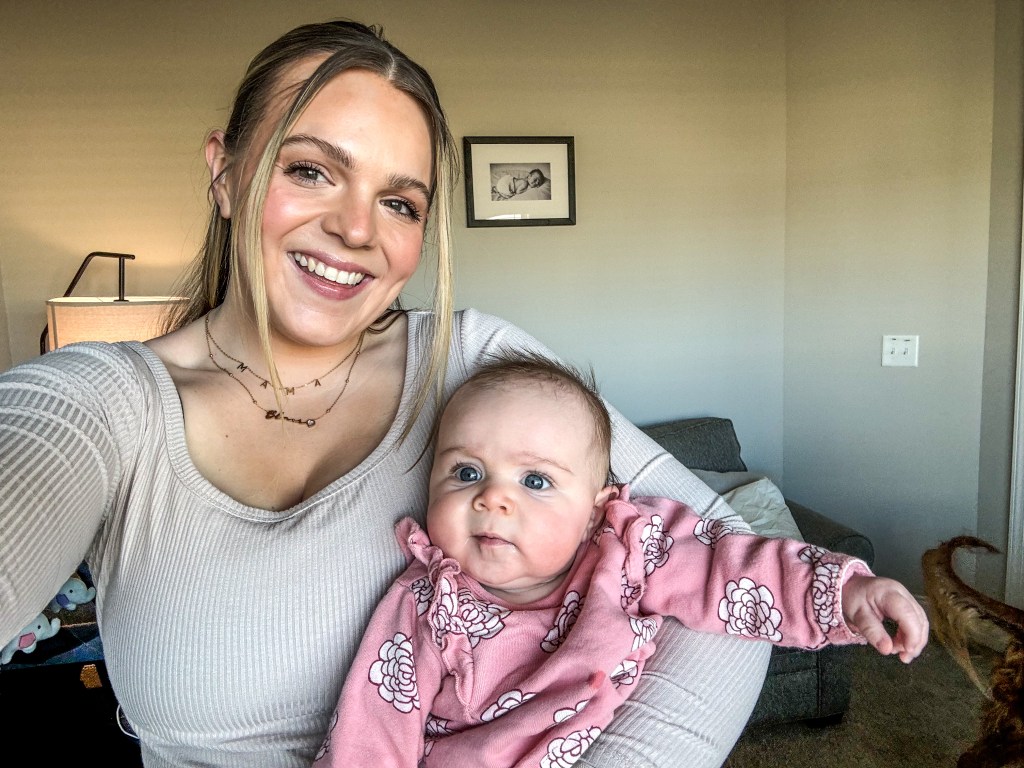
Based on my poll from the other night on Instagram, most of you experienced difficulties with your postpartum journey well after the 6 week period. Whether that be physically, mentally or emotionally. After the 6 week OBGYN visit we are taught to believe that we can take on anything motherhood throws at us. To get back into the groove of things without any sense of direction or feelings of certainty. Made to believe that any complications or issues we had after 6 weeks meant something was “wrong” with us or “that’s just apart of having a baby” or “it’s probably because you’re tired”. Of course we’re tired, tired of the unobtainable standard society has created for women
For me, the first 6 weeks were an absolute blur. After my daughter Blair was born all I could think about was leaving the hospital and taking care of her in the comfort of our own home. I was focused and determined to breast feed and make sure she was getting adequate nutrition. This was a big worry for me, as she has some trouble with her latch. I then had to maneuver my new breast pumps and figure out how to use them all while my milk was coming in as I was extremely engorged and uncomfortable. No one truly prepares you for the days your milk comes in and how unbelievably uncomfortable it can be, especially if your baby isn’t latching and feeding properly. It felt like I had an elephant sitting on my chest. I then had to figure out which bottles she would take, when I needed to pump, if I was pumping enough, how much I needed to feed her, how to properly store and freeze my milk. This was all in the first couple of days at home.
I then shifted focus to making sure she was getting enough tummy time during her wake windows, engaging with her and using developmentally appropriate toys, constantly talking and singing to her.
Shortly after Blair was born my Papa passed away, 10 days after she was born to be exact. This wasn’t something unexpected, but seemed very surreal in the moment. My Papa had suffered from Alzheimer’s for the past 7-8 years. My Papa was the most intelligent, witty, and loving man I knew. He and my Nana were married for 68 years and my grandparents took care of me frequently when I was a child. Papa retired early to stay home and take care of me when my mom had to return back to work from her maternity leave.
During an extremely happy and joyous time for my family we were also experiencing a tremendous loss and navigating through grief. Still recovering physically from childbirth, I made it a point to be there for my family. For my Dad and especially for my Nana.
Then followed the holidays, Blair’s first Halloween, Thanksgiving, Christmas. We were constantly surrounded by family and friends and got to share all of her “firsts” with them. It truly was a magical season.
I would say the first two and a half months postpartum I was not taking care of myself at all. A typical day would consist of me waking up before Blair, pumping, chugging two to three cups of coffee and zero water. She would wake up, I would feed her, play with her, put her down for her first nap. I would look at the clock and it would already be noon and I’ve had no water or food at this point. I was constantly worried about the wellbeing of my child and everyone else before myself. This is something that I have struggled with, being a people pleaser. It only seemed to be heightened becoming a mother and in the postpartum period.
Through this time I had discovered I had some digestive issues that really needed to be taken care of. When I saw a specialist and she asked me how long the symptoms had been going on for, I couldn’t give her an exact timeline because I had been so distracted with everything else.
I truly have an amazing support system: my husband, our family, our friends. I knew at any moment I could reach out and ask for help but a part of me felt guilty. I’m her mother, I should be able to do it all. I thought I could take care of a newborn, take care of myself, take care of the house, process grief and emotion, get back into an exercise routine, take care of everything without the help of others.
There is a societal pressure put on women to make them feel like they need to “have it all together” or just “power through” because the generation before did. We glorify how quickly a mother can “bounce back” physically and return to work rather that nurturing her needs well beyond the 6 week postpartum period.
Many physical and emotional effects from childbirth occur well after 6 weeks. Postpartum hair loss typically peaks around 3-4 months postpartum, troubles with the pelvic floor can last for years if not treated properly, it can take up to 6 months for your gut micro biome to return to normal, postpartum depletion of nutrients can have lasting effects on a woman’s body.
Pregnancy and labor and delivery are two of the hardest things a woman’s body can do. Throughout pregnancy, a woman’s body is constantly depleted of nutrients that are used to help grow and develop a strong and healthy baby. Then through labor and delivery, a woman’s energy stores are completed drained in completing the biggest task the body can physically go through.
When going through the postpartum period, most women (like myself) don’t adequately hydrate and nurture their bodies, women are constantly in a deficit. It is so incredibly important to change the standard of postpartum care and support. Women need support through the whole healing process, not just through 6 weeks.
Women need continued resources and education on what their body can potentially go through during the postpartum periods and that you don’t have to just “power through” and “deal with it” because you had a baby. There are ways to fix these issues and help rehabilitate and heal your body and mind.
There is an ever growing community of women that are willing to share their experiences and start to discussion on the standard of postpartum care for women. Science is continually changing and we need to change the standard of care for women. Support them instead of tear them down, praise them instead of judge them, and educate them instead of providing a lack of resources.
It is my goal and hope that as a healthcare worker myself, I can help change the standard of postpartum care for women and increase awareness on what support mothers truly need.
 Allison Bearden, RN
Leave a comment